


Bruce Springsteen - The Ghost of Tom Joad

Written by: Moti Kupfer
Release date - 21.11.1995

"I want to make a record where I don't have to play by the rules or have any hit singles." That was the wish of Bruce Springsteen in the mid-1990s, during what was called his "lost period".
"I didn't do a lot of work. Some people would say I didn't do my best work," the Boss told "Rolling Stone" in 2009, and the truth is that they're right.
The beginning of the 1990s caught Springsteen in a kind of professional decline. In 1989 he parted ways with his backing band, the "E Street Band", a legendary backing band in its own right, whose members were crucial figures in the path of a huge solo artist who nevertheless still needed a band to develop his story.
He said that he had lost his vision and did not know what to do with them next. He moved to Los Angeles for part of those years, something seen as a kind of betrayal by the working-class hero from New Jersey.
Springsteen's career, which had soared in the 1980s, suddenly took an uncharted course, but the truth is that there was stability of an entirely different kind. Springsteen was focused on building his family. In 1991 he married the singer Patti Scialfa, with whom he had three children between 1990 and 1994.
Later Springsteen recorded an album, "Waiting on the End of the World", and shelved it. In 1995 he recorded several new songs meant for his greatest-hits collection, "Greatest Hits". One of those songs was "The Ghost of Tom Joad", which ultimately became the title track of his eleventh album, "The Ghost of Tom Joad", released on November 21, 1995.
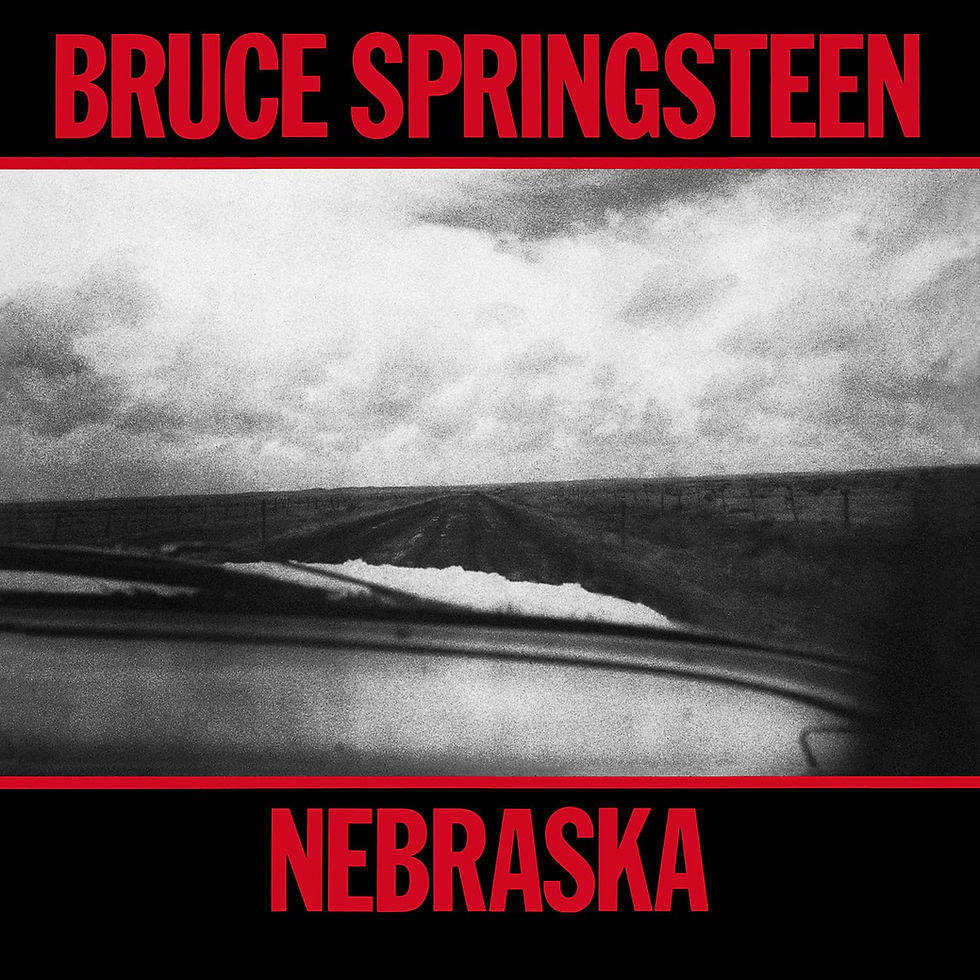
Springsteen wrote it as a rock song, but since he did not like the result, he set it aside and eventually used it on his second acoustic album, a few months later. The first acoustic album was "Nebraska".
Most of the songs are accompanied by acoustic guitar, and the lyrics are generally a bleak reflection of life in the mid-1990s in America and Mexico. The figure of Tom Joad entered the American consciousness in John Steinbeck's 1939 Pulitzer Prize-winning novel "The Grapes of Wrath", set against the economic hardships of the Great Depression.
The novel spawned a film starring Henry Fonda, which in turn inspired folk singer Woody Guthrie to write "The Ballad of Tom Joad".
Springsteen was also influenced by the 1985 book by Dale Maharidge and Michael Williamson about people living on the street, "Journey to Nowhere: The Saga of the New Underclass".
The album's release was accompanied by Springsteen's acoustic tour, "Ghost of Tom Joad", which ran from 1995 to 1997 and took place mainly in small venues. Springsteen first performed "The Ghost of Tom Joad" at Neil Young's benefit concert at the Bridge School in 1995.
"Once I cut 'The Ghost of Tom Joad', I had a feeling for the record I wanted to make," Springsteen said. "It was an acoustic album where I picked up elements of the themes I had worked on in the past and set the stories in the mid-'90s."
That was certainly true of the album's title song, which documented the other side of the prosperity of the Clinton era, using delicate, minimalist instrumentation and a sad melody to deliver timeless images of families sleeping in their cars in the Southwest, with no home, no job, no peace, no rest.
Pictures of ordinary people, together with immigrants and a criminal or two, clinging desperately to the American dream that has become elusive because of class divisions and corporate greed. But Springsteen rejected any notion of despair: "Even if the stuff is dark, even if there's tragedy involved, it's still exciting. The truth is always hopeful. It's always inspiring, no matter what it is."
Still, it was not easy to sell "The Ghost of Tom Joad" to the general public. It was Springsteen's first album since 1973 to miss the top five, even though it won a Grammy for Best Contemporary Folk Album. Springsteen wrote that he knew the album would not draw his largest audience.
And yet it was "Rage Against the Machine" who found in "The Ghost of Tom Joad" a strong fit for the band's populist and left-wing leanings.
"I was a huge fan of 'The Ghost of Tom Joad'," recalled Tom Morello. "It was my favorite record for a long time. I think I gave the CD to Zack [de la Rocha] for Christmas that year." In 1997 the band members performed a cover of the title song, which was first released on video in 1997 and then on their covers album, "Renegades", in 2000.
Springsteen sings on the album about a range of subjects, from an ex-convict judged by an American society waiting for him to fall, in "Straight Time", to the story of a petty criminal trying, without much success, to live an honest life, in "Highway 29".
Springsteen drew inspiration from books such as "Journey to Nowhere: The Saga of the New Underclass", in which he read about Joe Marshall Jr., who worked in the Mahoning County sheriff's office for 23 years after leaving the steel industry. And so the song "Youngstown", about an unemployed steelworker, was born. The song returned to a common theme Springsteen had touched on before, the gap between the rich and the working class.
On March 13, 1995, Springsteen opened his morning newspaper and read an exposé by reporters Mark Arax and Tom Gorman about a vast Mexican network of methamphetamine labs spread across California.
The Sinaloa cartel cooked methamphetamine in California and smuggled it into nearly every American state, running an operation that was efficient and remarkably profitable, one that proved irresistibly tempting to field workers who did hard labor for a fraction of the pay. "Workers who earn as little as $5,000 a year picking California's crops can make that much in half a dozen illicit cooking sessions," wrote Arax and Gorman. But the rewards came at great risk: the hydriodic acid fumes that were a byproduct claimed many victims. To contain the fumes, they breathed acidic gases and spat blood.
The article left a lasting impression on Bruce, who, inspired by it, wrote "Sinaloa Cowboys", the tragic three-act story of Miguel and Louie Rosales, two young brothers from northern Mexico who cross the border to make an honest living as field workers in California, despite their father's warning that no gift comes without a price.
In 1995, immigration reform was not a large part of the national discourse in the United States. It was, however, an integral part of the ongoing conversation between Bruce and his fans. In fact, it was one of the central themes of his new album, and several songs on the album touched on the plight and circumstances of immigrants, whether from Southeast Asia ("Galveston Bay") or from Latin America ("Sinaloa Cowboys", "Balboa Park"). But nowhere is the subject explored with greater sensitivity and empathy than in the gripping, cinematic story of "The Line".
The last section of the album abandons the immigrant theme and focuses on more personal subjects, such as a toxic relationship in "Dry Lightning", and another song inspired by Dale Maharidge's book, "New Timer", which is defined as a new breed of street people who hit rock bottom because of economic hardship.
Unlike older vagrants, they had once been members of the middle class, which made their circumstances especially painful. Another influence on the song was the true story of Thomas Jefferson "Alabama" Glenn, who became a drifter during the Great Depression. Glenn and two other drifters were killed one night for no apparent reason.
So too was the story of Frank Adam, who left a wife and children behind in Pennsylvania to find work, but ultimately became a drifter, rode freight trains, and ended his life in a senseless death.
From such a sad story, the only way to go is up the positivity scale, with "Across the Border", an optimistic song about our ability to cling stubbornly to faith and hope, even when our minds tell us the odds are almost zero.
There are many extraordinary stories on "The Ghost of Tom Joad", but one of the exceptions is "Galveston Bay", written by Springsteen inspired by the 30,000 Vietnamese who emigrated from Saigon to Texas in the late 1970s.
Many of them, finding the climate and terrain familiar and friendly, were drawn to the crabbing and shrimping industries, which offered the Vietnamese a chance to work for themselves and sell to local bait shops.
The growing competition worried the locals. Resentment bred accusations of unfair competition, overfishing and regulation violations, and when civil tactics failed, things quickly turned violent. By 1979 there had been a number of arson attacks on Vietnamese fishing boats.
Things came to a head in the town of Seadrift on the evening of August 3, 1979, when a local crabber named Billy Joe Aplin confronted two Vietnamese brothers (both also crabbers), and the brothers shot and killed Aplin in self-defense. During that bloody evening, three Vietnamese boats were burned and a house in which a Vietnamese family lived was set on fire.
The album closes with "My Best Was Never Good Enough", inspired by Jim Thompson's 1952 crime novel "The Killer Inside Me", which tells of a small-town sheriff in whom a sociopath hides, becoming more and more dominant as the story progresses.
Springsteen wrote the song at the dawn of the cable news era, as society began to grapple with the idea of a 24-hour news cycle and the oversimplification of complex political and social problems that came with it. Against this backdrop Bruce wrote the song to try to illustrate how pop culture belittles complex moral issues, and how the nightly news shrinks and packages life in order to strip human events of their dignity.
For Listening: Spotify, Apple Music


Comments